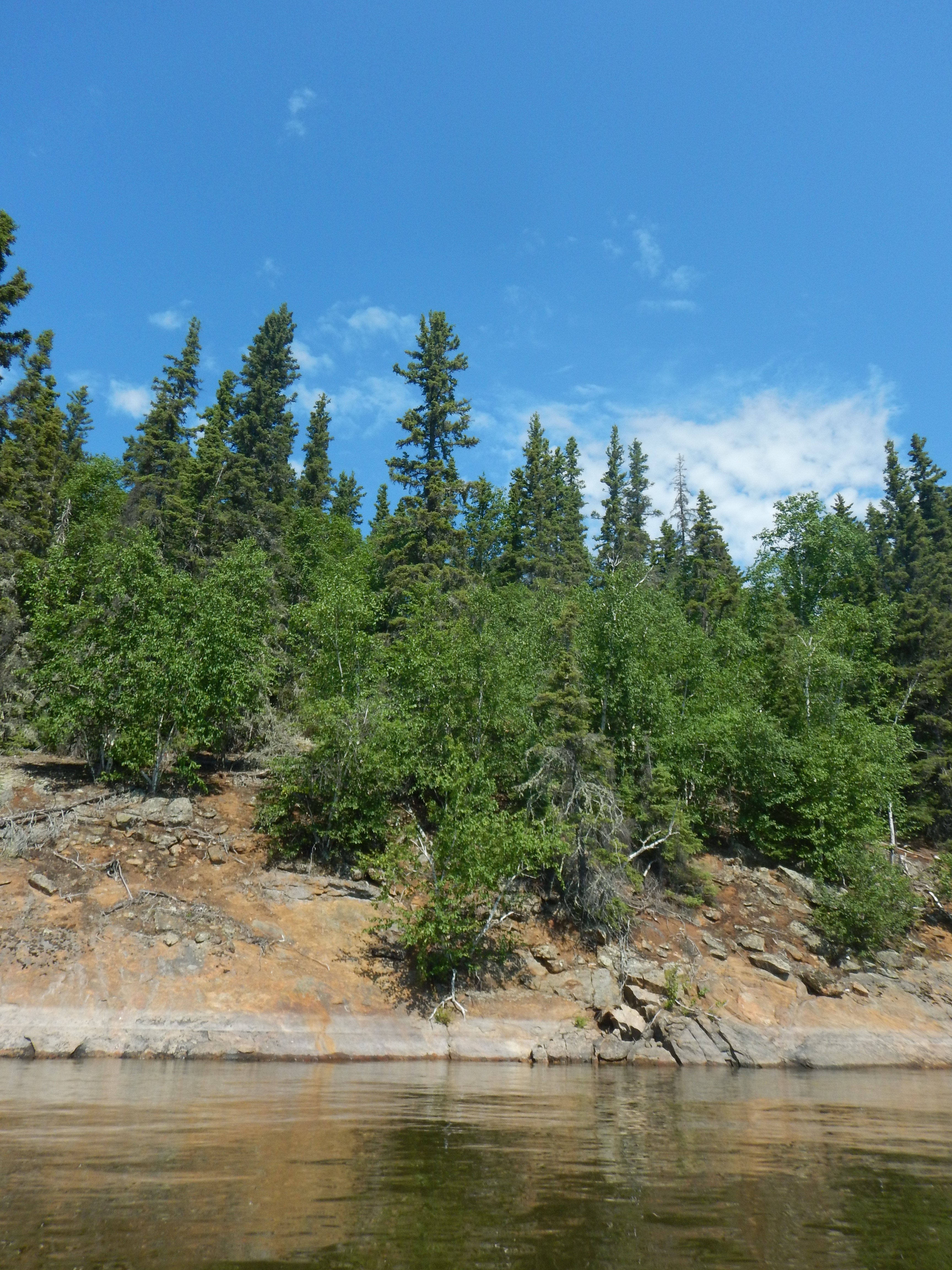
A Continent-Scale Belt of Forest
The boreal forest — also referred to internationally as taiga — extends in a broad arc across the northern latitudes of the Northern Hemisphere. In Canada, it spans from the Atlantic coast of Newfoundland and Labrador westward through Quebec, Ontario, Manitoba, Saskatchewan, Alberta, British Columbia, and into the Yukon and Northwest Territories. The Canadian portion is among the most intact of any boreal region in the world, with large areas still relatively free of industrial fragmentation.
The forest occupies a climatic zone characterized by long, cold winters and short growing seasons. Mean annual temperatures across the boreal range from approximately -5°C to +5°C depending on latitude and continental position, while precipitation is modest — generally between 400 and 750 millimetres per year. In many interior locations, the combination of low temperatures and low evapotranspiration means that the landscape retains moisture despite relatively low rainfall totals.
Climate Drivers: Cold, Short, and Variable
The boreal experiences extreme seasonal variation. In northern Manitoba or central Quebec, winter temperatures regularly drop below -30°C, while July temperatures in the same locations can exceed 25°C. This range — more than 55 degrees Celsius between extremes — places intense physiological demands on resident organisms.
The growing season for trees in the boreal core is typically 60 to 120 days. Coniferous species such as black spruce (Picea mariana) and jack pine (Pinus banksiana) are particularly well adapted to these conditions. Black spruce retains its needles year-round, allowing it to begin photosynthesis immediately when temperatures rise in spring, without the energy cost of regenerating foliage. Jack pine produces serotinous cones that require the heat of fire to open — a direct adaptation to the fire cycle that periodically resets large tracts of the forest.
Trembling aspen (Populus tremuloides) and white birch (Betula papyrifera) fill the deciduous component of the boreal, often appearing as post-fire pioneers. Their faster growth and greater palatability make them preferred browse for moose, beaver, and white-tailed deer at the southern boreal margin.
Soil Types: Thin, Cold, and Often Waterlogged
Boreal soils reflect the region's climatic constraints. The most common upland soil type is the podzol (or spodosol), formed under coniferous vegetation and characterized by a leached, pale grey E horizon beneath the organic layer. Heavy rainfall percolating through conifer needles generates acidic conditions that mobilize iron and aluminum downward, leaving the upper mineral horizons nutrient-depleted.
In lowland areas — which comprise a substantial fraction of the boreal landscape — organic soils dominate. Where drainage is impeded by topography or permafrost, sphagnum mosses accumulate and form peatlands. Canada contains the largest peatland area of any country, with estimates placing the total organic soil carbon stored in boreal and sub-arctic peatlands in the range of hundreds of gigatonnes. These deposits represent millennia of slow organic accumulation under waterlogged, anaerobic conditions that inhibit decomposition.
The Role of Fire
Fire is not an aberration in the boreal — it is a fundamental ecological process. Lightning ignitions during dry summer thunderstorms set off some fires; historically, Indigenous peoples also used fire deliberately to manage landscapes, improve habitat for game, and facilitate travel. The natural fire cycle in different boreal ecosystems varies from roughly 50 to 500 years depending on fuel load, climate, and moisture conditions.
Post-fire succession in the boreal follows a reasonably predictable sequence. Early colonizers include fireweed (Chamaenerion angustifolium), various grasses, and the aforementioned trembling aspen and white birch. Over decades, shade-tolerant conifers such as white spruce (Picea glauca) and balsam fir (Abies balsamea) gradually overtop the pioneer species in many regions. Jack pine, which regenerates most abundantly immediately after fire, maintains dominance in drier upland sites across the shield.
The relationship between fire and biodiversity in the boreal is complex. Many species — including the black-backed woodpecker, several cavity-nesting birds, and numerous invertebrates — depend on recently burned forest for nesting and foraging. A mosaic of burn ages across the landscape therefore supports far greater biodiversity than either perpetual old growth or perpetual young forest alone.
Peatlands and Water
Perhaps the most distinctive feature of the Canadian boreal at landscape scale is the prevalence of wetlands. Muskeg — the colloquial term for boggy, sphagnum-covered terrain — covers vast areas of the Hudson Bay Lowlands, the Mackenzie Valley, and numerous other regions. Bogs receive water and nutrients primarily from precipitation and are highly acidic and oligotrophic. Fens receive some inputs from groundwater and are somewhat more nutrient-rich.
These peatland systems support a specialist assemblage of plant and animal life. Insectivorous plants including sundew (Drosera spp.) and pitcher plant (Sarracenia purpurea — the provincial flower of Newfoundland and Labrador) obtain nitrogen from trapped invertebrates in lieu of the nutrient-deficient peat substrate. Sandhill cranes, yellow rails, and Le Conte's sparrows breed in and around boreal fens across the Prairie provinces and Ontario.
The Boreal in a Changing Climate
Research from Natural Resources Canada and academic institutions has documented rising temperatures across the boreal over recent decades, at rates exceeding the global average in many regions. Longer fire seasons, more frequent drought years, and the northward movement of certain pest species — notably the mountain pine beetle in western Canada — have altered forest dynamics in ways that were not observed in previous centuries.
The interaction between climate warming and the carbon stored in boreal peatlands is a subject of ongoing scientific attention. As permafrost thaws in more northerly regions, previously frozen organic material becomes available for decomposition, potentially releasing stored carbon. The net effect on the global carbon cycle depends on a range of factors including decomposition rates, changes in plant productivity, and the hydrology of thawing landscapes. Government of Canada assessments through Natural Resources Canada continue to monitor these trends at the national scale.
Ecological Significance Beyond Canada's Borders
The ecological relevance of Canada's boreal does not stop at national boundaries. More than half of all North American landbird species spend at least part of their annual cycle in the Canadian boreal, migrating each spring from wintering grounds as far south as Peru and Argentina. The boreal thus functions as a breeding reservoir for populations that disperse across the Western Hemisphere each autumn. Declines in boreal forest quality — whether from logging, fire suppression, or climate-driven change — therefore carry consequences for bird populations observable far from the forests themselves.
Similarly, the freshwater systems that originate in the boreal flow south and east into agricultural and urban regions. Major river systems including the Churchill, the Nelson, the Albany, and the Mackenzie drain boreal catchments and support fisheries, municipal water supplies, and cultural practices for both Indigenous and non-Indigenous communities downstream.